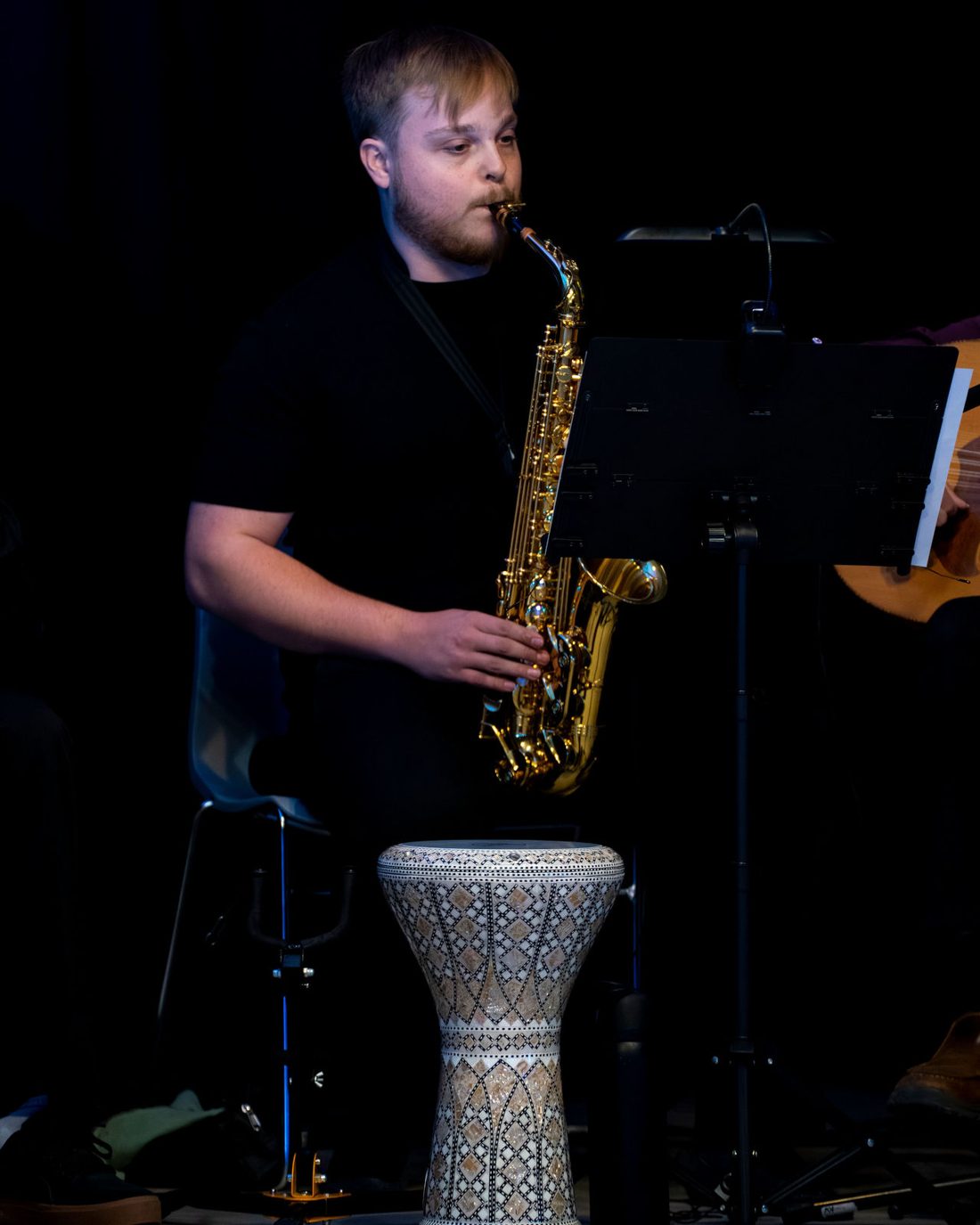
Maqam Rast
The Colour of Maqam Rast
If Arabic music had a home key, it would be Rast. It is the maqam most students meet first, the one theorists reach for when they explain the system, and — not coincidentally — the one that sounds the most grounded. The word itself means “straight” or “upright” in Persian, and that is exactly how it sits: level, open, unhurried.
The note that isn’t on your piano
The heart of Rast is its third degree. On a piano it would fall somewhere between E and E-flat — a neutral third, roughly a quarter-tone lower than the major third we’re trained to expect in Western music. That single note is the whole personality of the maqam. Play it too high and you drift toward a plain major scale; too low and you tip into something mournful. The magic is in the middle.
Starting on C, the scale of Rast runs:
| Degree | Note | Feel |
|---|---|---|
| 1 | C (rast) | home |
| 2 | D | rising |
| 3 | E half-flat | the colour |
| 4 | F | rest |
| 5 | G (nawa) | second home |
| 6 | A | lift |
| 7 | B half-flat | leading, but softly |
| 8 | C | arrival |
Two jins, one journey
A maqam isn’t really a scale — it’s a path built from smaller units called ajnas (singular jins). Rast is a jins Rast on the bottom (C–D–E½♭–F) handing off to a jins Rast or jins Nahawand on top (G–A–B½♭–C). Good taksim playing lives in that handoff: you establish the lower tetrachord, rest on the fifth, and then reveal the upper one like turning a corner onto a familiar street.
Playing it on the saxophone
The saxophone has no quarter-tone keys, so that neutral third has to come from you. Three tools:
- Alternate fingerings. For a half-flat E in the staff, I lip down a standard E while adding the low-C or side keys to darken and flatten it — the exact combination depends on your horn.
- Embouchure. Dropping the jaw and opening the throat pulls the pitch down without killing the tone. This is the muscle you build over months, not days.
- The ear, always. Record a great singer or a qanun playing Rast and match them by feel. The interval is a taste, not a fixed frequency — it flexes a little depending on whether you’re ascending or resolving.
Tune the note to the phrase, not the phrase to the note.
A place to start
Put on a recording of Rast — anything by the great Egyptian ensembles will do — and just hum the lower tetrachord until that third stops sounding “wrong” and starts sounding like home. Once your ear accepts it, your fingers will follow, and you’ll have unlocked the doorway to the whole system.
Next time: how Rast modulates into Bayati, and why every wedding I play seems to end up there.